Service · Quantum Readiness

Plan the move to quantum-safe encryption, and find where quantum really helps.

Encryption is the foundation of digital trust, and quantum computers will break much of what we use today. Federal agencies now have deadlines to move to quantum-safe cryptography. At the same time, quantum computing is becoming useful for science, and AIExecutive Order 14434Federal agencies now say Super Intelligence (SI) for what most people call AI. Same technology, same legal definition.The White House · 2026-09-29Open the source ↗ is what makes it usable.

The federal timelineEO 14412Executive Order 14412Securing the Nation Against Advanced Cryptographic AttacksThe White House · 2026-06-22Open the source ↗ · EO 14413Executive Order 14413Ushering in the Next Frontier of Quantum InnovationThe White House · 2026-06-22Open the source ↗ · OMB M-26-15OMB memorandumM-26-15, Execution of the Migration to Post-Quantum CryptographyOffice of Management and Budget · 2026-06-24Open the source ↗
  1. Jun 2026Executive orders signed; OMB memo issued
  2. Oct 22, 2026Agency migration plans submitted
  3. 2026–27Phase 1: inventory, risk, strategy, training
  4. 2027–28Pilots and early migrations
  5. Dec 31, 2030Quantum-safe key exchange for high-value systems; contractors comply
  6. 2031Quantum-safe signatures
  7. 2035Everything else

Offers

What we offer today, and what comes with partners.

01

Quantum briefings and training

Plain-language executive briefings and workforce courses, taught the way we teach everything: no jargon until it earns its place.

Where AI comes inIncludes how AI and quantum change each other.

Who it’s forAgency leadership, Chief AI Officer and security offices, workforce programs
02

Quantum opportunity assessment

“Is quantum worth it for this problem, and when?” Use-case screening, cost estimates, a roadmap, and an independent read on vendor claims.

Where AI comes inStrong classical AI baselines set the bar quantum has to beat.

Who it’s forAgencies acting on the new National Quantum Strategy; health research; defense

03

AI for quantum computers

Research and tools that make today’s noisy quantum computers cheaper to use and their results easier to trust.

Where AI comes inMachine learning error mitigation that adapts to each device and reports calibrated confidence intervals.

Who it’s forDOE, DARPA, NSF and Air Force research programs; quantum hardware and cloud companies

04

Quantum-safe readiness assessment and roadmap With a named partner, once signed

Cryptography inventory, risk-based priorities, a migration roadmap, crypto-agility design and OMB reporting for phase one of the federal migration.

Where AI comes inMachine learning finds encryption in code, configurations and network traffic, the automation the OMB memo asks for.

Who it’s forEvery agency; contractors and primes facing the 2030 deadline

05

Hybrid quantum–AI pilots Scales with hiring and partners

Measured pilots on cloud quantum hardware in fraud detection, health risk prediction and optimization.

Where AI comes inQuantum machine learning, always benchmarked against classical AI.

Who it’s forHealth, tax and benefits, and defense agencies

Research track

Quantum results that show their work.

Doctoral research by our CEO, Cupid Chan, aims to match the accuracy of standard zero-noise extrapolation from a single circuit run instead of three or more, adapt to new devices without retraining from scratch, and attach calibrated confidence intervals to every result. It is the same promise Veraxum makes, answers that show their work, applied to quantum computers.

The work is ongoing. We will publish results here when they are peer reviewed.

Question
Can a device-adaptive machine learning error mitigator match zero-noise extrapolation at lower cost on unseen circuits?
Methods
Test-time adaptation; conformal prediction intervals
Status
In progress, The George Washington University
Talk
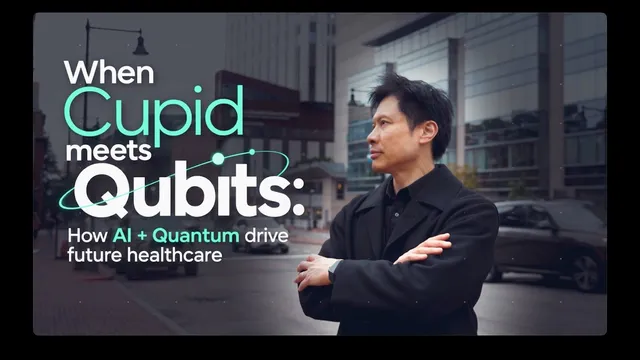
When Cupid Meets Qubits, Global Health Catalyst Summit 2026 at HarvardKeynote videoWhen Cupid Meets Qubits: Global Health Catalyst 2026 keynote at HarvardYouTube (Cupid Chan channel) · 28 min · 2026-10-05Open the source ↗
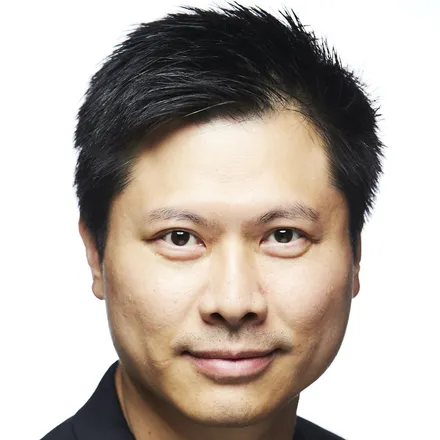
Cupid Chan

Who leads this work

Principal: Cupid Chan, CEO

Doctoral research in machine learning for quantum error mitigation; chair of the Linux Foundation’s BI & AI work group since 2017.

How we staff: briefings, assessments and research are led directly by our principal. Larger engagements are staffed through targeted hiring and teaming partners, including established post-quantum cryptography vendors for the cryptographic products themselves.

ProfileWatch the keynote · 28 min

Start with a briefing.

Paid work can be awarded directly under the SBA 8(a) program, ordered from our GSA Multiple Award Schedule (47QTCA23D002K), or contracted directly.

Ninety minutes, at no cost: your leadership team, plain language. You leave knowing what phase one asks of you and where quantum could help.

Request a briefing →